

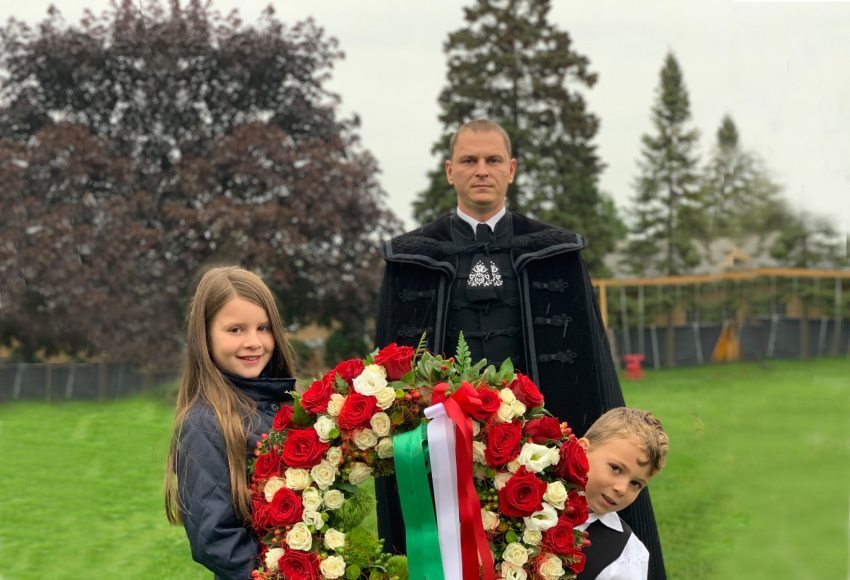
Even during his student years in Marosvásárhely (Târgu Mures), there were always communities around Áron Trufán – whether he was going to folk dancing or Bible classes. No wonder that he later became the heart of the Hungarian community overseas, where he was serving then as a Reformed pastor with youthful and bold sermons. Áron is justly proud of his role in organizing the Hungarian Goulash Festival which became popular across America, as well as of the many friendships he helped to develop between people – and God.
Did you decide early on to become a priest?
For a long time I didn’t know what I was going to do when I grew up, and once my foster father, who had grown up in a very poor family, said: if I don’t want to work, I should become a priest! (laughs) He meant it as a joke, but this is exactly how it turned out.
Then let me put it this way: what was the second influence that led you to theology?
My sister, Dr. Eszter Trufán, who is now a university professor, started going to youth Bible classes. I went with her once, and there was a beautiful girl there so from then on I went too! We made a great community, about 30 or 40 of us ate about a hundred kilos of French fries every weekend! And in Marosvásárhely (Târgu Mureș), in the Reformed high school where I was studying, so many people told me that I would never get into theology, that I made it my personal ambition to get in! In Transylvania, the highest grade in school was 10, you got grades for your behavior, and I earned a 10 in that only once. I wasn’t a very good kid, and I was told that if I wanted to get into theology with those grades, well, good luck!
But luck – or someone else – was with you, and you were able to continue your studies in Kolozsvár (Cluj Napoca)…
There were eight of us competing for one single place, and only 12 boys got in. But I made it, and although for a while I felt that it was someone else’s dream for me to be a priest, not mine, it was such a privilege to get in that I couldn’t just leave. And then they started saying that if I didn’t get hit by a tram, I’d be a priest anyway…
Did America help or intervene?
At the end of my third year, I came out to work for a summer on a ‘work and travel’ visa. I come from a farming family, but when I was a child the land had already no value, even though we worked a lot in agriculture. We sold what we produced on the market, it was hard manual work because in Transylvania there were no machines for everything. I made as much in one summer in America as my whole family made in a year at home…
 Hungaricum laude